
UGC Equity Regulations 2026 Under Review: What Centre Told Supreme Court
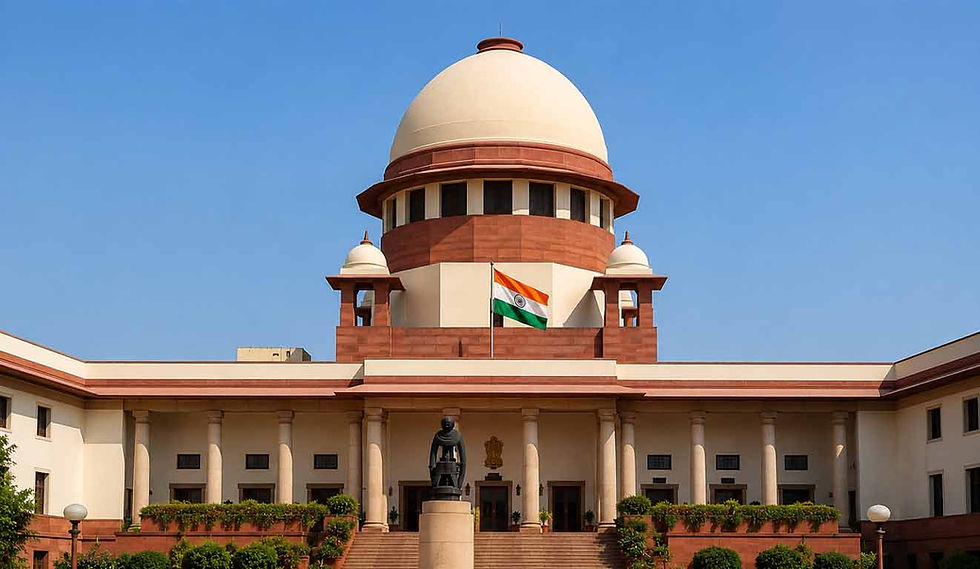
The Centre has informed the Supreme Court that the UGC Equity Regulations 2026, aimed at tackling discrimination in higher education institutions, are being reconsidered. The rules have remained on hold since January after the Supreme Court raised concerns over their language, scope and possible misuse.
The future of the UGC Equity Regulations 2026 is once again under scrutiny after the Union government told the Supreme Court on Thursday that it is reconsidering the controversial framework governing discrimination and equity in India's universities and colleges.
Solicitor General Tushar Mehta informed a Supreme Court bench comprising Chief Justice of India Surya Kant and Justices Joymalya Bagchi and V Mohana that the regulations were under reconsideration.
The development comes nearly seven months after the Supreme Court put the University Grants Commission (Promotion of Equity in Higher Education Institutions) Regulations, 2026 in abeyance.
The regulations were introduced as a stronger framework for addressing discrimination in higher education, but several provisions subsequently faced legal challenges.
What happened in the Supreme Court?
During the August 20 hearing, the Centre informed the Supreme Court that the UGC regulations were being reconsidered and requested time before the court framed the questions that would ultimately have to be decided.
The Supreme Court adjourned the batch of petitions challenging the regulations for four weeks.
The court also asked the UGC to submit a comprehensive counter-affidavit within four weeks. Petitioners will be allowed to file rejoinders within two weeks thereafter.
The development means the legal battle over the UGC Equity Regulations 2026 has not ended. Instead, attention will now turn to whether the government and UGC modify the regulations before the Supreme Court proceeds further.
Why were the UGC Equity Regulations 2026 introduced?
The regulations were designed to strengthen mechanisms for preventing discrimination and promoting equity across higher education institutions.
They followed years of debate over caste discrimination on university campuses and litigation seeking stronger institutional mechanisms to protect students.
An important part of the background is a 2019 petition filed by Radhika Vemula and Abeda Salim Tadvi, mothers of Rohith Vemula and Payal Tadvi respectively.
The petition sought stronger mechanisms to address caste-based discrimination in higher educational institutions.
In 2025, the Supreme Court had also stressed the need for a strong mechanism to tackle such discrimination. Following consultations and stakeholder suggestions, the UGC eventually notified the new regulations in January 2026.
Why did the Supreme Court put the regulations on hold?
The Supreme Court stayed the operation of the 2026 regulations on January 29, 2026.
Among the concerns raised by the court was whether parts of the framework were too broadly worded and potentially capable of misuse.
The court particularly examined the separate definition of “caste-based discrimination” contained in Regulation 3(1)(c), while another provision already contained a wider definition of discrimination.
The court also questioned why ragging — one of the major forms of harassment faced by students in educational institutions — had not been brought within the scope of the regulations.
While passing its interim order, the Supreme Court described parts of the framework as prima facie vague and raised concerns over their potentially sweeping consequences.
The key controversy: Who is protected?
One of the most contested aspects of the regulations concerns the definition of caste-based discrimination.
Petitioners challenging the framework have argued that the definition should be caste-neutral and that protection against discrimination should extend irrespective of a person's caste category.
The 2026 framework, meanwhile, was intended in particular to address discrimination experienced by historically disadvantaged communities, including Scheduled Castes, Scheduled Tribes and Other Backward Classes.
This has produced two competing arguments.
Supporters of stronger targeted protections say caste discrimination cannot be separated from India's history of structural inequality and that universities need enforceable mechanisms to protect vulnerable students.
Critics argue that any anti-discrimination framework should guarantee equal protection and procedural safeguards to every student and member of an institution.
Resolving that tension is likely to remain one of the central challenges if the regulations are rewritten.
What rules apply to universities now?
For students and higher education institutions, this is an important distinction:
The UGC Equity Regulations 2026 are currently not in force.
When the Supreme Court stayed the new regulations in January, it directed that the University Grants Commission (Promotion of Equity in Higher Educational Institutions) Regulations, 2012 would continue to remain operational until further orders.
Therefore, universities and colleges have not been left without an anti-discrimination framework while the legal dispute continues.
What could happen next?
The Centre's decision to reconsider the regulations opens several possibilities.
The government and UGC could modify disputed definitions, introduce stronger procedural safeguards, clarify how complaints should be investigated, or redesign provisions that have attracted constitutional challenges.
They could also present a substantially revised framework before the Supreme Court.
However, the government has not yet publicly detailed what specific changes will be made.
Until a revised framework is formally notified or the Supreme Court passes further orders, the status of the 2026 regulations remains unchanged.
Why this matters for students and universities
The dispute goes beyond the wording of a UGC regulation.
India's universities accommodate students from widely different caste, economic, religious, regional and social backgrounds. Institutions therefore face the difficult task of simultaneously protecting students from discrimination, maintaining fair grievance procedures and preventing complaint mechanisms from being misused.
The debate surrounding the UGC regulations highlights a larger policy question: how should universities address structural discrimination while ensuring due process and equal protection?
A revised framework will therefore need to balance institutional accountability with procedural fairness.
What students should know
For now, students should remember three things:
The UGC Equity Regulations 2026 remain on hold.
The 2012 UGC equity regulations continue to operate under the Supreme Court's interim direction.
The Centre is reconsidering the 2026 framework, meaning revised regulations could emerge before the litigation moves to its next stage.
The Supreme Court proceedings and any subsequent UGC notification will determine what India's next campus anti-discrimination framework ultimately looks like.
Updated+ Explainer
Are the UGC Equity Regulations 2026 currently applicable?
No. The Supreme Court placed the 2026 regulations in abeyance in January 2026.
Which UGC regulations are currently operating?
The Supreme Court directed that the 2012 regulations continue to remain in force until further orders.
Has the UGC Equity Regulations 2026 been cancelled?
No. The framework has been stayed and is now under reconsideration. That is different from a final cancellation or striking down of the regulations.
Why are the rules controversial?
Challenges have focused particularly on definitions relating to caste-based discrimination, the scope of protection, possible misuse and procedural fairness.
What happens next?
The UGC has been asked to file a comprehensive counter-affidavit within four weeks. The government's reconsideration of the regulations may also result in changes to the framework before further proceedings.
Editorial Note: This article explains an ongoing legal proceeding based on information available as of August 20, 2026. The status of the regulations may change following further government action, UGC notifications or Supreme Court orders.


