
1998 US Embassy Bombings: How the Attacks Triggered America’s Hunt for Al-Qaeda
Updated: Sep 11

On the morning of August 7, 1998, two explosions thousands of kilometres apart transformed the way the United States viewed a relatively little-known militant network led by Osama bin Laden.
Truck bombs struck the US embassies in Nairobi, Kenya, and Dar es Salaam, Tanzania, within minutes of each other. The attacks killed 224 people, including 12 Americans, and wounded more than 4,500, according to the FBI.
Most of the victims were Africans.
The bombings were not simply attacks on two diplomatic missions. They demonstrated that al-Qaeda had developed the ability to plan complex operations across borders, maintain clandestine cells and strike American targets almost simultaneously.
For Washington, the attacks marked a turning point.
Bin Laden and al-Qaeda had already attracted the attention of American intelligence agencies. But after Nairobi and Dar es Salaam, the threat was no longer theoretical.
A hunt that had been developing inside the US intelligence community became an urgent national-security campaign.
1998 US Embassy Bombings: Two Attacks, Minutes Apart
At approximately 10:30 in the morning in East Africa, a truck bomb exploded near the US Embassy in central Nairobi.
The blast devastated the embassy area and surrounding buildings. The destruction extended well beyond the diplomatic compound, with nearby structures collapsing and thousands of civilians caught in the explosion.
Minutes later, another truck bomb exploded outside the US Embassy in Dar es Salaam.
The Tanzania attack caused fewer casualties, but its near-simultaneous timing immediately suggested coordination rather than two unrelated incidents.
The FBI records 224 deaths across the two attacks and more than 4,500 wounded.
The overwhelming majority of the casualties were not American diplomats. They were Kenyan and Tanzanian citizens — embassy employees, office workers, pedestrians and people going about an ordinary working day.
That human cost remains central to understanding the attacks.
Why Were the US Embassies Targeted?
The bombings emerged from a broader confrontation that al-Qaeda's leadership was attempting to construct with the United States.
During the 1990s, Osama bin Laden increasingly portrayed the United States as the principal enemy of his movement.
In February 1998, bin Laden, Ayman al-Zawahiri and allied militants publicly endorsed a declaration calling for attacks against Americans.
Months later came the East Africa bombings.
The choice of embassies was significant. Diplomatic missions represented the United States overseas, but they could also be more accessible than heavily protected military facilities inside America.
The attacks demonstrated another characteristic that would become increasingly associated with al-Qaeda: extensive preparation.
A later declassified CIA presidential briefing noted that al-Qaeda associates had conducted surveillance of the US embassies in Nairobi and Dar es Salaam as early as 1993.
The operation, therefore, was not improvised. It had roots stretching back years.
The Network Behind the Bombings
Investigators gradually reconstructed a transnational operation involving operatives, safe houses, communications and logistical networks spanning several countries.
The investigation pointed toward al-Qaeda and Osama bin Laden.
According to the 9/11 Commission, American intelligence benefited from monitoring an al-Qaeda cell in Nairobi for roughly a year before the bombings. After the attacks, intelligence collected from that network helped US officials establish responsibility.
This was important.
Al-Qaeda was not functioning merely as an ideological movement issuing declarations from Afghanistan. It had demonstrated the capacity to organise operational cells far from its leadership.
East Africa showed what that network could do.
The FBI Builds the Criminal Case
While intelligence agencies attempted to identify the organisation behind the attacks and locate its leadership, the FBI launched an enormous forensic investigation.
Hundreds of FBI personnel were sent to Kenya and Tanzania.
Agents and specialists worked with Kenyan and Tanzanian authorities, examining bomb debris, interviewing witnesses, tracing suspects and reconstructing the logistics behind the operation.
The investigation eventually produced arrests, extraditions and prosecutions.
In November 1998, US authorities indicted Osama bin Laden and other alleged al-Qaeda members in connection with a wider conspiracy to murder Americans.

Several defendants connected to the embassy-bombing conspiracy would later be convicted in US federal court.
The investigation demonstrated something that would become increasingly difficult in the years ahead: the United States was confronting al-Qaeda simultaneously as a criminal organisation and as an international security threat.
Inside the CIA: Bin Laden Becomes a Priority
The CIA's interest in Osama bin Laden did not begin on August 7, 1998.
American intelligence officials had been examining his activities before the embassy attacks, and the CIA had already established a specialised unit focused on him.
But Nairobi and Dar es Salaam dramatically changed the stakes.
The bombings demonstrated that the organisation surrounding bin Laden was capable of conducting coordinated mass-casualty attacks against American targets.
The 9/11 Commission later described the embassy bombings as establishing al-Qaeda as a potent adversary of the United States.
Responsibility was also established relatively quickly.
According to the Commission, intelligence, particularly information obtained through monitoring the Nairobi al-Qaeda cell, soon pointed firmly toward bin Laden and his associates.
Washington now faced a much harder question:
How could the United States reach a terrorist leader protected by the Taliban in Afghanistan?
The Search for Bin Laden in Afghanistan
By 1998, Osama bin Laden was operating from Afghanistan, where the Taliban controlled most of the country.
That geography presented an enormous intelligence problem.
The United States had limited ability to operate openly inside Afghanistan. Capturing bin Laden would require reliable local intelligence, cooperative partners and an operation capable of reaching him without triggering a larger political or military crisis.
The CIA therefore explored covert options involving Afghan partners.
Intelligence officers attempted to develop information about bin Laden's movements, compounds and security arrangements.
But intelligence had to do more than establish that bin Laden was somewhere in Afghanistan.
To launch an operation, Washington needed sufficiently precise and timely information about exactly where he was — and confidence that civilians would not bear an unacceptable cost.
That standard repeatedly became an obstacle.
Operation Infinite Reach
The US response was not limited to covert intelligence.
On August 20, 1998 — thirteen days after the embassy bombings — President Bill Clinton ordered cruise-missile strikes against targets in Afghanistan and Sudan.
The operation became known as Operation Infinite Reach.
Tomahawk missiles struck training camps associated with bin Laden's network in Afghanistan.
The United States also attacked the Al-Shifa pharmaceutical facility in Khartoum, Sudan, which the Clinton administration alleged was connected to chemical-weapons activity and bin Laden's network.
The Sudan strike subsequently became highly controversial, particularly over the intelligence used to justify the target.
Bin Laden survived.
Instead of ending the confrontation, the strikes marked the beginning of a more sustained American effort to find and neutralise him.
The Missed Opportunities
Between 1998 and the September 11 attacks, US officials repeatedly examined intelligence suggesting possible locations for bin Laden.
Some intelligence officers believed there were opportunities to strike.
The 9/11 Commission documented one particularly significant episode in 1999.
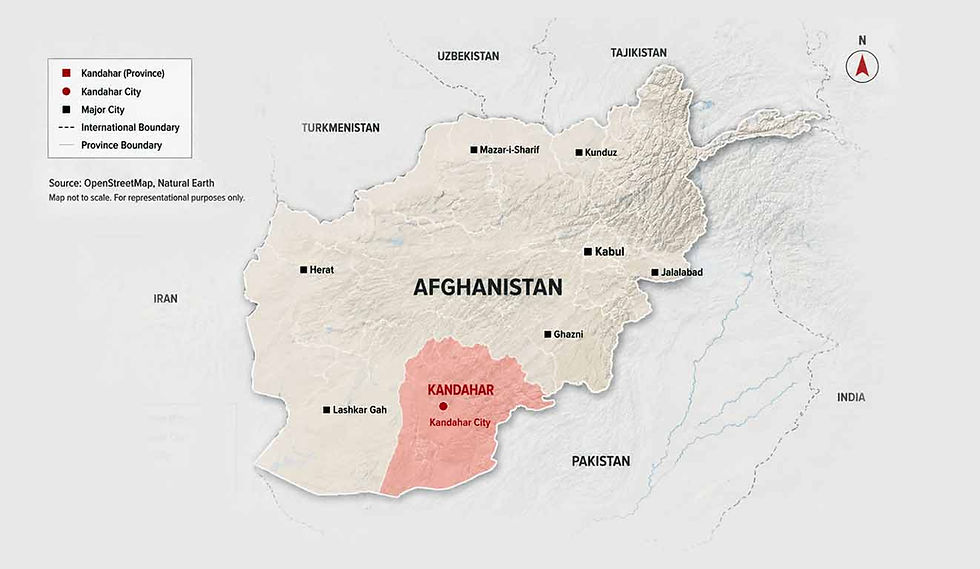
CIA assets reported detailed information about bin Laden's movements around Kandahar over several days. Working-level officials considered the intelligence unusually strong.
Yet senior officials had to weigh several uncertainties.
Was bin Laden definitely present?
How reliable were the sources?
Could civilians be killed?
Could a nearby mosque be hit?
And what would happen if the United States launched missiles on uncertain intelligence and killed innocent people while bin Laden escaped?
The missiles were not fired.
In retrospect, these episodes became some of the most heavily debated counterterrorism decisions of the pre-9/11 period.
But they also illustrate a fundamental intelligence problem: information that appears compelling years later may have looked substantially less certain to officials required to make a decision in real time.
A New Kind of Enemy
The embassy bombings exposed a problem that did not fit comfortably into America's existing security system.
Al-Qaeda had no conventional army.
It controlled no recognised state.
Its operatives could move across countries, operate through local cells and communicate through networks that crossed multiple jurisdictions.
The FBI could investigate individual conspirators.
The CIA could collect intelligence overseas.
The military could strike camps.
Diplomats could pressure governments.
But destroying the organisation required all of those systems to work together.
Before September 11, that integration remained incomplete.
The 9/11 Commission later concluded that the policy response to al-Qaeda before 9/11 was largely defined by the decisions made after the embassy bombings, but that government institutions ultimately failed to meet the growing threat.
From Nairobi to the USS Cole
The embassy attacks were not the end of al-Qaeda's campaign.
On October 12, 2000, suicide bombers attacked the USS Cole while the US Navy destroyer was refuelling in Aden, Yemen.
Seventeen American sailors were killed.
Once again, investigators connected the operation to al-Qaeda.
The pattern was becoming increasingly difficult to ignore.
1998: American embassies in East Africa.
2000: an American warship in Yemen.
Behind those attacks was an organisation whose leadership remained protected in Afghanistan.
And an even larger operation was being prepared.
The Road to September 11
The significance of the East Africa bombings became even clearer after 9/11.
A declassified President's Daily Brief delivered to President George W. Bush on August 6, 2001 — titled “Bin Ladin Determined To Strike in US” — referred specifically to the embassy bombings.
The document noted that the attacks demonstrated al-Qaeda's ability to prepare operations years in advance.
It also said associates of bin Laden had surveilled the Nairobi and Dar es Salaam embassies years before the attacks.
The warning captured the central lesson intelligence agencies had learned from East Africa:
Al-Qaeda was patient.
It could study targets for years.
It could establish networks far from Afghanistan.
And the absence of an immediate attack did not mean an operation had been abandoned.
Thirty-six days after that presidential briefing, hijacked aircraft struck New York and Washington.
Why the 1998 Embassy Bombings Still Matter
The East Africa embassy bombings occupy a crucial place in the history of modern terrorism.
They revealed al-Qaeda as an organisation capable of conducting large, coordinated international attacks.
They pushed Osama bin Laden much higher on Washington's security agenda.
They triggered one of the largest terrorism investigations undertaken by the FBI.
They accelerated CIA efforts to locate bin Laden.
And they produced difficult debates over intelligence, covert operations, missile strikes and the threshold required before lethal force could be used.
Most importantly, the attacks offered an early warning about the type of adversary the United States was facing.
The warning was recognised.
What remained unresolved was how to stop it.
UPDATED+ | BIG PICTURE
The 1998 embassy bombings should not be remembered only as a prelude to September 11.
For Kenya and Tanzania, they were national tragedies in their own right.
Hundreds of families lost relatives. Thousands of people were injured. Most victims had no connection to American foreign policy or the geopolitical confrontation invoked by al-Qaeda.
From an intelligence perspective, however, August 7, 1998 represented a watershed.
Before the attacks, Osama bin Laden was an emerging terrorist target already under US scrutiny.
After them, al-Qaeda had demonstrated that it could turn ideology, money, training, clandestine cells and years of preparation into coordinated mass-casualty operations.
The hunt was underway.
The question was whether the United States could find bin Laden before his network struck again.
It could not.
Editorial Sourcing Note
This article draws on records from the FBI, CIA, 9/11 Commission, US Justice Department and State Department, including official accounts of the 1998 embassy bombings and the subsequent hunt for Osama bin Laden.


