
Why the Strait of Hormuz Matters to India: Oil, Trade and Strategic Risks Explained
A narrow stretch of water between Iran and Oman can influence energy supplies, shipping costs and fuel markets thousands of kilometres away in India.
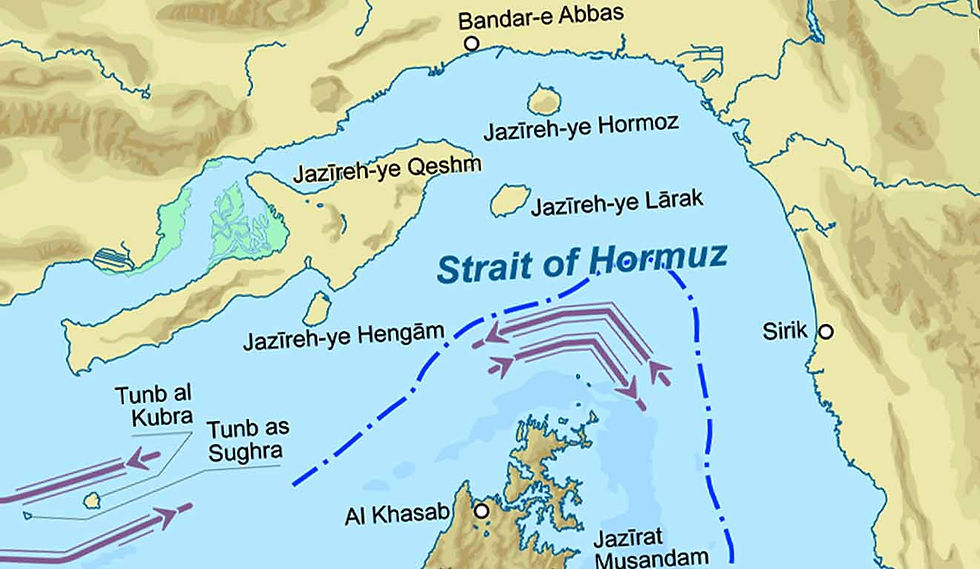
The Strait of Hormuz connects the Persian Gulf with the Gulf of Oman and Arabian Sea. For decades, it has been one of the world's most important energy chokepoints because crude oil, petroleum products and liquefied natural gas (LNG) exported by major Gulf producers pass through it.
For India, the importance of the Strait of Hormuz goes beyond geography. India is a major energy importer, has extensive economic links with Gulf countries and depends on maritime routes connecting West Asia with the Indian Ocean.
The disruptions of 2026 demonstrated this vulnerability in real time. India responded by diversifying crude supplies, protecting priority gas consumers and monitoring shipping and energy availability.
So why does the Strait of Hormuz matter to India, how much energy normally passes through it, and what could another major disruption mean?
Where Is the Strait of Hormuz?
The Strait of Hormuz lies between Iran to the north and Oman to the south.
It connects:
Persian Gulf → Strait of Hormuz → Gulf of Oman → Arabian Sea → Indian Ocean
This geography gives the strait extraordinary strategic importance.
Oil and LNG loaded at ports in countries including Saudi Arabia, Iraq, Kuwait, Qatar, Bahrain and the United Arab Emirates may need to pass through or otherwise depend on the Hormuz corridor, depending on their export infrastructure and destination.
Once vessels leave the strait, they enter the Gulf of Oman and can move into the Arabian Sea, including toward India and other Asian markets.
Where Is the Strait of Hormuz?
Why Is the Strait of Hormuz So Important?
The answer is the sheer volume of energy normally transported through it.
According to the U.S. Energy Information Administration, around 20.7 million barrels per day of crude oil and petroleum liquids passed through the Strait of Hormuz in 2024.
During the first half of 2025, flows averaged approximately 20.9 million barrels per day.
That represented roughly 20% of global petroleum liquids consumption and about one-quarter of globally traded maritime oil.
The strait is therefore not merely a regional shipping route.
A serious disruption can become a global energy-market event.
How Much Oil Passes Through the Strait of Hormuz?
EIA data illustrate the scale:
2022: 21.9 million barrels/day
2023: 21.8 million barrels/day
2024: 20.7 million barrels/day
First half of 2025: 20.9 million barrels/day
The numbers fluctuate with production, sanctions, demand and geopolitical conditions, but the strategic importance remains.
Few maritime routes concentrate such a large share of global energy trade into such a geographically constrained area.
Why Does the Strait of Hormuz Matter to India?
India's exposure comes from several interconnected factors.
1. India is a major crude oil importer
India requires substantial crude imports to support its refining system and domestic energy demand.
That makes developments affecting global crude supply and shipping routes economically important even when the disrupted cargo is not directly destined for India.
A severe Hormuz disruption can influence the international price of oil itself.
2. India imports energy from the Gulf
India has longstanding energy relationships with Gulf producers.
But India's exposure has changed. During the 2026 crisis, the Ministry of Petroleum and Natural Gas said India had substantially diversified its crude sourcing. By March, the government said around 70% of India's crude imports were arriving through routes outside the Strait of Hormuz, compared with around 55% earlier.
That diversification provided India with an important buffer.
3. LPG remains particularly important
The picture is different for LPG.
During the March 2026 disruption, the Indian government said the country imported around 60% of its LPG consumption, and approximately 90% of those LPG imports normally came through the Strait of Hormuz.
That made LPG supply management particularly important during the crisis.
4. LNG and natural gas are exposed
Qatar is one of the world's major LNG exporters, and LNG cargoes from the Gulf normally use the Hormuz route.
A prolonged disruption can therefore affect gas availability and international LNG prices.
5. Shipping costs can rise
A geopolitical crisis can increase:
marine insurance costs
freight rates
security risks
shipping delays
and potentially the cost of rerouting or securing cargoes.
These effects can matter even if physical energy supplies continue.
Why India Should Care
What Happened at the Strait of Hormuz in 2026?
The strategic risks associated with Hormuz became more than a hypothetical scenario during the 2026 West Asia conflict.
Shipping and energy flows through the strait were severely disrupted.
EIA data show total oil flows through Hormuz averaging 14.6 million barrels per day in the first quarter of 2026, down from around 20 million barrels per day during the preceding quarters.
The disruption also affected LNG flows.
India responded with a combination of supply diversification, inventory management, alternative procurement and protection of priority consumers.
In March, the Indian government said refineries were operating at high utilisation rates and that adequate crude inventories were being maintained.
The government also advised consumers against panic buying.
How Did India Respond to the 2026 Hormuz Disruption?
India's response provides a useful real-world example of how countries manage chokepoint risk.
Diversification of crude imports
The government said around 70% of India's crude imports were being routed outside Hormuz by March 2026.
That reduced India's direct crude exposure compared with earlier sourcing patterns.
Alternative LNG procurement
Indian companies sought LNG cargoes from alternative suppliers and routes.
Priority gas allocation
The government protected supplies to priority sectors, including domestic PNG and CNG.
Refinery inventories
Indian refineries maintained crude inventories and operated at high utilisation levels.
Monitoring
The Ministry of Petroleum and Natural Gas established a 24×7 control room to monitor energy supply and stock positions.
The response illustrates an important principle of energy security:
Dependence on imported energy is only one part of the risk. Dependence on a particular route is another.

Is the Strait of Hormuz Open Now?
The situation improved substantially after the peak of the 2026 disruption.
The U.S. Energy Information Administration reported in July that shipping traffic through Hormuz had increased following a June 18 memorandum of understanding between the United States and Iran that ended months of conflict and reopened the strait.
EIA expected crude production and trade flows to recover toward pre-conflict levels, although the restoration of production and inventories would take time.
That means the immediate conditions have changed — but the underlying strategic vulnerability has not.
Hormuz remains a chokepoint.
Can Iran Close the Strait of Hormuz?
Iran's geographic position gives it significant strategic leverage around the strait.
But “closing Hormuz” should not be treated as a simple switch that one country can turn on and off without consequences.
A sustained closure would affect global energy markets, regional exporters and Iran itself, while also creating the potential for major international military and diplomatic responses.
The better question is therefore not simply whether Hormuz can be closed.
It is:
How much disruption can occur, for how long, and how quickly can alternative supplies and routes compensate?
The events of 2026 demonstrated that even a major disruption can have substantial consequences without permanently removing the route from global trade.
Are There Alternatives to the Strait of Hormuz?
Yes — but alternative capacity is limited compared with normal Hormuz flows.
Saudi Arabia operates the East-West crude oil pipeline, which can move crude toward the Red Sea.
The United Arab Emirates has pipeline infrastructure allowing some crude to reach the Fujairah export terminal, outside the Strait of Hormuz.
EIA estimated that Saudi and UAE pipelines together could provide approximately 4.7 million barrels per day of available bypass capacity during a disruption.
Compare that with normal Hormuz oil flows of roughly 20 million barrels per day.
The difference explains why alternative pipelines can reduce the impact of a disruption but cannot simply replace the strait's full capacity.
What Happens if the Strait of Hormuz Is Disrupted?
The effects can spread through the economy in stages.
From Hormuz to India
Would a Hormuz Crisis Increase Petrol and Diesel Prices in India?
Potentially — but the relationship is not instantaneous or automatic.
A Hormuz disruption can push international crude prices higher if markets expect a significant supply shortage.
Higher crude costs can increase the cost of importing and refining oil.
However, Indian retail petrol and diesel prices depend on several factors beyond crude prices, including taxation, refining economics, exchange rates and pricing decisions by oil marketing companies.
It would therefore be misleading to say that a disruption automatically causes a specific increase in Indian pump prices.
The more accurate conclusion is:
A sustained Hormuz crisis creates upward pressure on India's energy import costs and increases the risk of wider price effects.
Why LPG Could Be More Vulnerable Than Petrol and Diesel
This distinction became especially visible during the 2026 disruption.
India has diversified crude sourcing significantly, meaning much of its crude can reach the country without passing through Hormuz.
LPG was more exposed.
In March 2026, the government said around 90% of India's imported LPG normally came through the Strait of Hormuz.
At the same time, India said domestic petrol and diesel requirements could be met through its refining system without importing those finished fuels.
That means headlines suggesting that “Hormuz closes and India immediately runs out of petrol” oversimplify the situation.
Different fuels have different supply chains.
Why India's Energy Diversification Matters
India's response demonstrates why diversification is central to energy security.
If a country buys most of its energy from one supplier, it faces supplier risk.
If those imports all travel through one route, it also faces route risk.
Diversification therefore involves:
multiple suppliers
multiple geographic regions
alternative shipping routes
domestic production
strategic inventories
and increasingly, a broader energy mix.
India's shift toward crude supplies that do not depend on Hormuz reduces one dimension of vulnerability, although it cannot eliminate exposure to global oil-price movements.
Does Hormuz Matter Only Because of Oil?
No.
This is an important misconception.
The strait matters because of:
Crude oil
Petroleum products
LNG
LPG
Commercial shipping
Regional security
Marine insurance
India-Gulf economic connectivity
and the wider strategic relationship between the Gulf and Indian Ocean.
The Persian Gulf and Arabian Sea are parts of the same interconnected maritime system.
Why the Strait Matters to India's Maritime Strategy
For India, the Arabian Sea is not a distant geopolitical theatre.
It sits directly alongside India's western coastline.
Shipping moving from the Gulf toward India enters the wider Arabian Sea environment, making stability in the western Indian Ocean important for Indian energy and trade security.
This is also why India's maritime interests extend beyond its territorial waters.
Hormuz, the Gulf of Oman, Arabian Sea, Bab el-Mandeb and eventually the Malacca Strait form parts of a larger network of maritime chokepoints that influence Indian commerce.
Understanding Hormuz is therefore a starting point for understanding India's broader maritime strategy.
Strait of Hormuz vs Strait of Malacca
Hormuz is not the only major chokepoint relevant to India.
The Strait of Malacca, connecting the Indian Ocean with East and Southeast Asia, carries even larger volumes of oil.
EIA data show approximately 23.2 million barrels per day of crude and petroleum liquids passed through Malacca during the first half of 2025, compared with about 20.9 million barrels per day through Hormuz.
India sits geographically between these two critical energy corridors:
Hormuz to the west
and
Malacca to the east
This geography helps explain the strategic importance of the Indian Ocean.
Why Hormuz Will Remain Important Even as India Diversifies
India's energy system is changing.
The country is expanding renewable energy, increasing alternative sourcing and developing a broader range of energy relationships.
But oil and gas will remain important to India's economy for the foreseeable future.
As long as Gulf energy exports remain significant to Asian markets, the Strait of Hormuz will retain strategic importance.
Diversification can reduce India's direct physical dependence on the route.
It cannot fully isolate India from the global price consequences of a major Hormuz disruption.
That distinction is essential.
Strait of Hormuz and India: Key Takeaways
The Strait of Hormuz is one of the world's most important energy chokepoints, connecting the Persian Gulf with the Gulf of Oman and Arabian Sea.
Under normal conditions, roughly 20 million barrels of oil and petroleum liquids per day have passed through the route in recent years.
For India, the significance comes from a combination of energy imports, Gulf economic relationships, shipping and exposure to global oil and gas prices.
India has reduced its direct crude vulnerability by diversifying supply. During the 2026 crisis, the government said about 70% of crude imports were being sourced through routes outside Hormuz.
But some energy flows remain considerably more exposed. The government said roughly 90% of India's imported LPG normally came through Hormuz at the time of the March disruption.
Alternative pipelines in Saudi Arabia and the UAE provide some bypass capacity, but they cannot fully replace normal Hormuz volumes.
The events of 2026 therefore reinforced a larger strategic lesson:
Energy security is not only about where energy comes from. It is also about how it reaches you.
For India, that makes the Strait of Hormuz a small piece of geography with consequences extending far beyond the Gulf.
Sources & Editorial Methodology
Updated+ reviewed current information from the U.S. Energy Information Administration (EIA) and official briefings from the Government of India and Ministry of Petroleum and Natural Gas.
Historical flow figures were separated from 2026 disruption data because traffic through the Strait of Hormuz changed significantly during the year.
Government statements regarding India's crude diversification, LPG exposure, refinery operations and gas-supply management were treated as official Indian government assessments.
This explainer should be updated when major changes occur in Hormuz shipping flows, India's energy sourcing or regional security conditions.


