
India IPO Market 2026: Why IPO Activity Is Surging and What Investors Should Watch
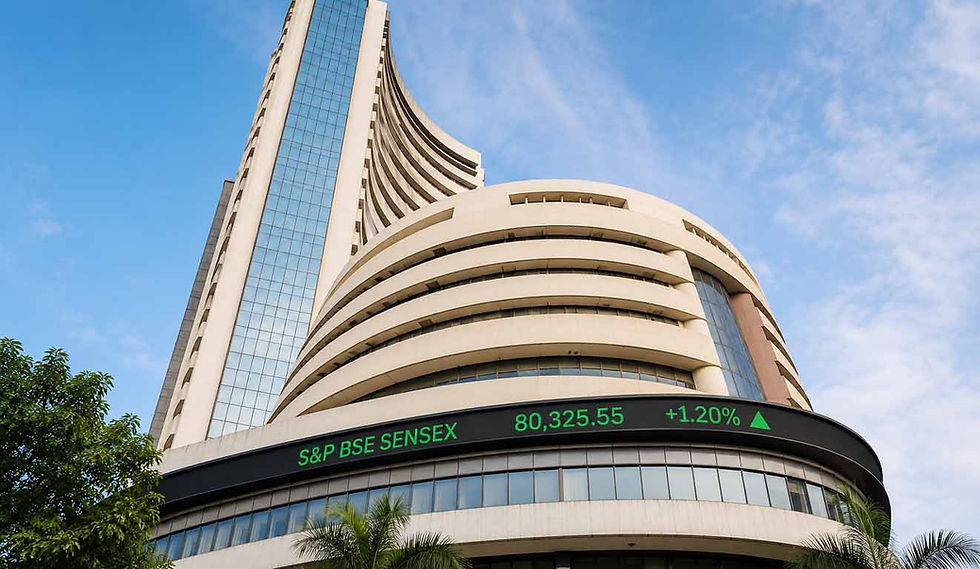
India's primary market is witnessing another burst of activity in 2026, with companies across financial services, manufacturing, technology, healthcare and consumer businesses tapping investors for capital.
The momentum has been particularly visible in August. At least 20 public offerings were launched or announced during the month, according to Reuters, while India's wider equity-capital market has been heading toward one of its strongest fundraising months on record.
But a busy IPO calendar does not automatically mean every new listing represents an attractive investment.
Recent issues have produced very different outcomes: some have attracted extraordinary subscription levels, while others have struggled after listing. That divergence makes understanding the India IPO Market 2026 increasingly important for retail investors.
Why is the India IPO Market 2026 so active?
Several forces are working together.
Companies continue to see public markets as an attractive source of growth capital, while promoters and private-equity investors can use IPOs to partially monetise existing holdings.
At the same time, India's domestic investor base has become deeper.
Mutual funds, institutional investors and millions of retail market participants have created a larger pool of potential capital for companies coming to market.
Foreign portfolio flows have also improved recently. FPIs had invested about ₹23,544 crore into Indian equities in August through August 23, following ₹20,200 crore in July, according to Business Standard.
Together, these conditions can make the primary market more receptive to new offerings.
Subscription numbers can be spectacular — but they are not the whole story
One feature of India's IPO market is the enormous subscription numbers sometimes generated by popular offerings.
For example, Augmont Enterprises' ₹825-crore IPO was subscribed 105.78 times, while Tempsens Instruments India's ₹650-crore offering recorded subscription of about 184 times.
These numbers can attract attention.
However, oversubscription should not be interpreted as proof that a company is fundamentally attractive or that its shares will continue rising after listing.
Different investor categories—qualified institutional buyers, non-institutional investors and retail investors—can also show dramatically different demand.
Investors should therefore examine who is subscribing, not merely the headline multiple.
IPO subscription vs listing performance
The recent market demonstrates why this distinction matters.
Gaja Alternative Asset Management, India's first listed pure-play alternative asset manager, made its stock-market debut on August 26. Its shares opened above the IPO price and ultimately closed the session at ₹168.67, valuing the company at roughly ₹24 billion.
Other recent IPOs have produced weaker post-listing performances.
The lesson is straightforward: IPO demand, listing-day performance and long-term investment returns are three different things.
Fresh issue vs Offer for Sale: why the difference matters
Not all IPO money goes to the company.
An IPO can contain a fresh issue, an Offer for Sale (OFS), or a combination of both.
With a fresh issue, the company creates new shares and receives the proceeds, which may then be used for expansion, debt reduction, capital expenditure or other corporate purposes.
In an OFS, existing shareholders sell some of their holdings. The proceeds generally go to those selling shareholders rather than to the company.
This distinction can tell investors a great deal about the purpose of an IPO.
For example, appliance maker Atomberg Technologies recently filed draft IPO papers proposing a fresh issue of up to ₹450 crore, alongside an OFS by existing investors.
Valuation matters more than the IPO buzz
One of the most important questions investors should ask is:
How much am I paying for this business?
A strong company can still become a poor investment if shares are offered at an excessive valuation.
Investors can examine measures such as price-to-earnings ratios, price-to-book ratios, enterprise value, revenue growth, profitability and return on capital and compare them with listed competitors.
The objective is not simply to find a growing company.
It is to understand how much of that expected growth is already reflected in the IPO price.
What investors should read before applying for an IPO
The most useful source is not social-media commentary or the grey market.
It is the company's official offer documentation.
The Red Herring Prospectus can reveal revenue and profitability trends, debt, major shareholders, use of IPO proceeds, related-party transactions, litigation, industry risks and other material information.
For retail investors, five questions are particularly useful:
Why is the company raising money?
Is the business profitable and generating cash?
How much debt does it carry?
How does the IPO valuation compare with listed peers?
Are promoters raising growth capital or primarily selling their own shares?
What about IPO GMP?
Grey Market Premium or IPO GMP is one of India's most searched IPO-related terms.
It represents unofficial trading sentiment around an IPO before the shares formally list.
It can provide an indication of market expectations, but it has serious limitations.
The grey market is unofficial, premiums can change rapidly, and GMP does not provide a reliable assessment of the underlying company's financial quality.
For Updated+, I recommend treating GMP as supplementary market sentiment, never as an investment recommendation.
That editorial distinction will also strengthen the credibility of this section.
The IPO pipeline remains substantial
The current activity may not disappear quickly.
Anand Rathi Investment Banking CEO Samir Bahl told Moneycontrol that India's potential IPO pipeline could be around ₹2.2 lakh crore, suggesting a sizeable number of companies remain interested in accessing public markets.
New filings continue as well. Alongside Atomberg, companies from multiple sectors are preparing or pursuing public offerings.
This creates an opportunity for Updated+ to build a continuing IPOs & Markets editorial franchise rather than covering IPOs only as individual news events.
The bottom line
The India IPO Market 2026 is giving investors more choices, but more IPOs do not necessarily mean more attractive investments.
Large subscription numbers can demonstrate demand. Strong listing gains can generate headlines. GMP can indicate short-term sentiment.
None of them replaces fundamental analysis.
For investors considering an IPO, the more durable questions remain:
What does the company do? Is it financially healthy?
Why is it raising money? And is the valuation reasonable?
Those questions become even more important when IPO activity accelerates.
Updated+ Editorial Note:
This article is for informational and educational purposes only and does not constitute investment advice. IPO subscription, GMP, share prices and market conditions can change rapidly. Investors should review official exchange filings, offer documents and applicable SEBI disclosures before making investment decisions.


